
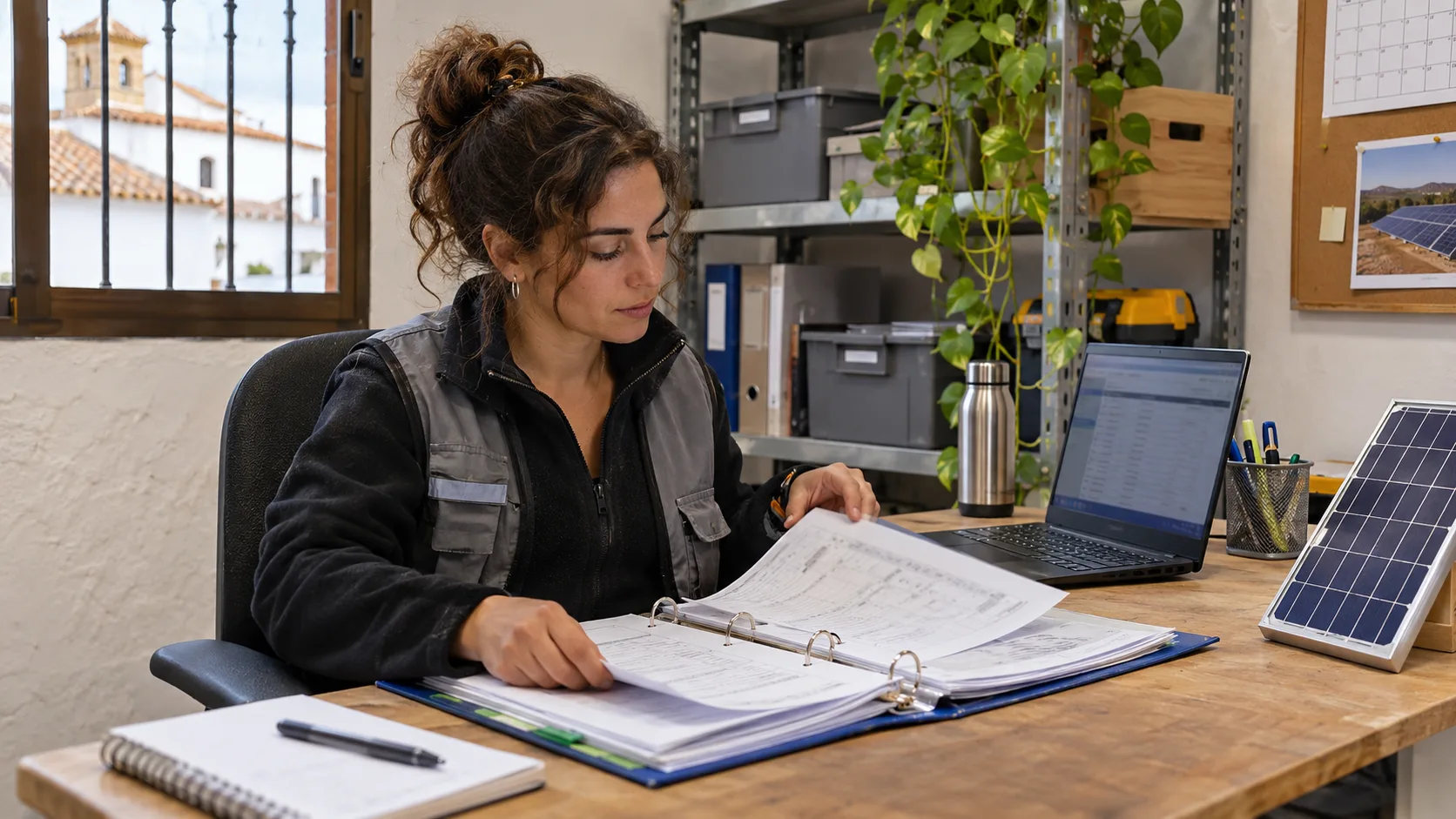
An alert is not yet a prepared visit
A company maintaining several solar installations needs to know which site and equipment an alert refers to, who reviews it and what information is missing before arranging a visit. Custom software could bring an alert together with authorised history and keep uncertainties visible. An alert remains a signal for a technician: it does not by itself identify the fault or authorise an intervention.
Sector tools already offer work reports and scheduling. Hiberus describes registering alerts with documentation and priority; iGEO describes a service calendar and a form for completing the work report. Before commissioning a new application, check whether the existing system covers the process or whether information needs connecting between tools.
Two installations and an alert: a fictional example
An imaginary company maintains installations A and B. Its office receives an alert for installation A mentioning inverter 1, but it does not say when the signal began. The record keeps the original message, declared installation and equipment and receipt time; the start of the issue remains unknown. A person checks the inventory match and decides the priority.
If the technician needs a visit, the office records the agreed date and confirmed access. A proposed date is not marked confirmed until agreed. After the visit, the technician records what was checked and what remains open; an observation without identified equipment remains unassigned. Coordinating a return visit awaiting a spare part also means distinguishing the order, receipt and appointment.
What a tailored solution could do
Adaris could assess a workflow bringing together alerts, inventory, calendar and reports through available authorised access. Rules can match exact identifiers and states; AI could summarise a note and flag missing information, showing the original for review. Connecting a model to application data through a function is a capability documented by OpenAI; implementation and compatibility must be assessed for each case.
A constrained assistant could consult permitted history and prepare a record for review. If an identifier is ambiguous or a source missing, it should flag the issue and ask for confirmation. The responsible person decides priority, visit and communication; in this pilot, the system does not change records, send messages or book visits by itself. Safety and intervention remain the responsibility of a competent professional.
Prepare before connecting systems
Identify the systems producing alerts, the inventory of installations and equipment, work orders and reports. Agree which identifier they share, who may see each item and what happens if a platform does not offer suitable access. Check actual export or connection options with providers; do not assume compatibility between manufacturers.
For visit notes, separating completed and outstanding work by equipment avoids presenting an open task as done: the HVAC maintenance report guide explores that control in another trade. Centroplan describes tracking defects found in its own maintenance system; each company must define its own process and review.
A pilot you can evaluate
Select fictional or authorised cases with complete, incomplete and ambiguous alerts. A person first prepares the correct reference. Compare proposed records and count alerts linked to the wrong equipment, missing data detected and invented details; also record review time. These are evaluation measures, not promised results.
Agree permissions and processing terms before using real information. If the pilot helps, define which system is the source of each item, who validates actions and how errors will be corrected. A next step is to ask Adaris to assess a specific integration or custom application, keeping tools that already work. Commercial enquiries are handled in Spanish.
Related services
Sources
Do alerts reach your team without the context for a visit?
Adaris’s AI-integration specialists for solar PV maintenance can summarise alerts and link them to a site and proposed work order for review before scheduling. Describe how you coordinate installations and work reports without private data, and we can assess the scope of a solution. Commercial enquiries in Spanish.