
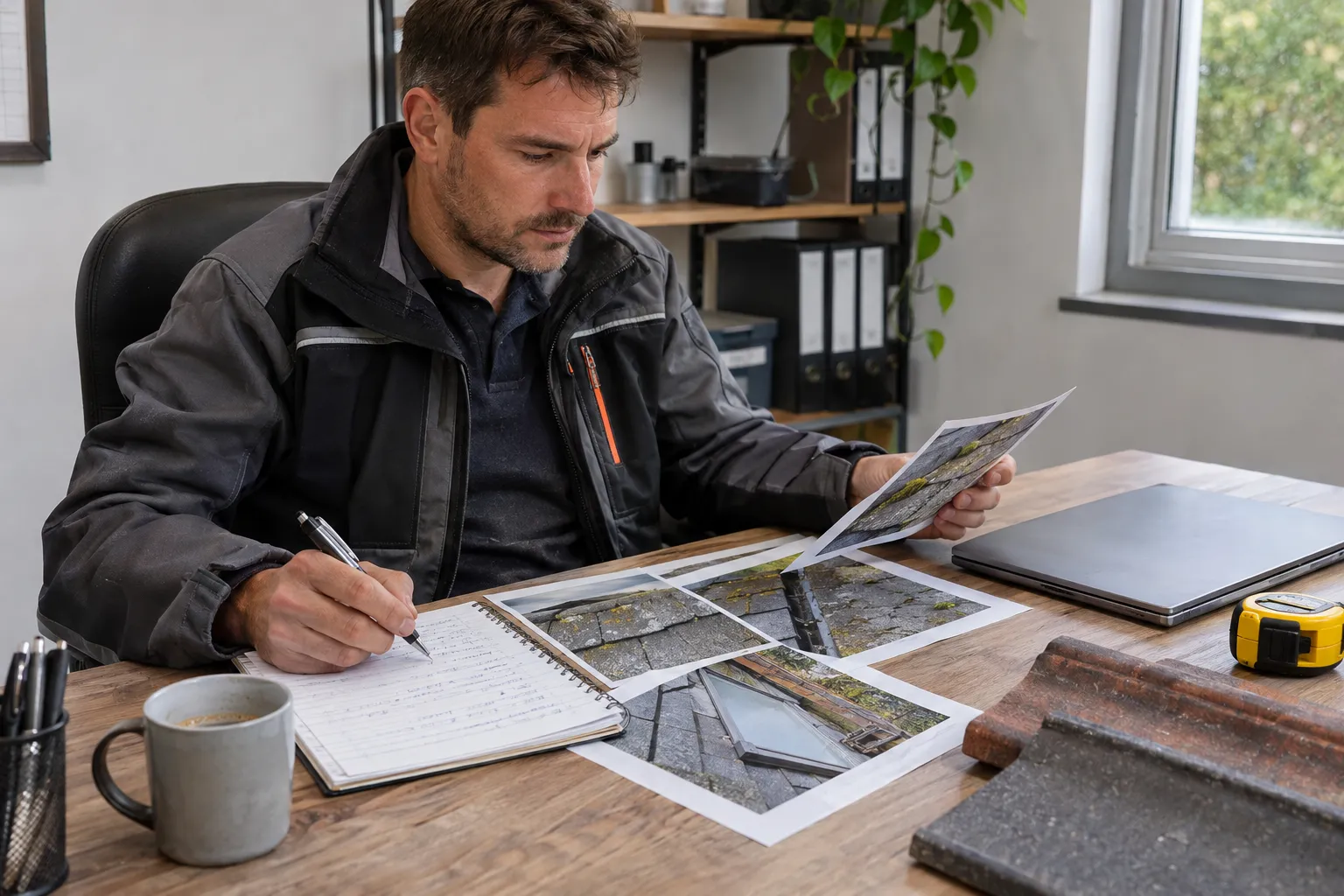
Photos do not tell the whole story
A crew returns from a roof with photos of two areas and a note saying “check junction”. If a report mixes up the locations or says an area was repaired when it was only inspected, the office and customer get a misleading account. A useful draft groups each photo with its area and note, keeps open work visible and flags anything nobody has identified.
Adaris could study custom software to organise that evidence for review. The responsible person checks each link and decides what to communicate. AI does not determine the source of a leak from a photo, certify a repair or close an issue on its own.
What belongs with each image
A roofing company describes receiving enquiries with a description and photo, while RoofLogic lists sample inspection and repair reports. Reportago describes putting before-and-after photos together in a report; each business must decide which identified photographs it needs to explain its work.
A useful record can retain the visit reference, date and area identified by the professional, the documented moment and the related note. Keep observations, recorded work and checks still due separate. A photo without an identified area remains unassigned; it should not be paired with another simply because they look alike. The guide to locating joints in chair photos addresses a similar problem of linking images to a location.
Fictional example: two areas, one unknown
In fictional visit V-18, note N1 identifies “area A, junction beside the courtyard; inspected” and photo F1 bears that reference. N2 says “area B, repair recorded; check pending” and F2 is identified as area B after work. A third photo, F3, has no reference. There is no recorded before photo for B or repair for A.
The draft would show F1 with N1 as an observation of A and F2 with N2 as an after-work image of B, without presenting F2 as proof the leak is fixed. F3 would remain unassigned and the report would request confirmation of its area; the check on B stays open. If another note conflicts, both sources remain available for the professional to resolve.
The reviewer compares the draft with the original photos and notes, corrects links and decides what goes into the report. As with organising a return visit awaiting a spare part, recording an open task does not mean it is complete.
How a tailored solution could work
With authorised copies of job notes and photos, an application could group identified references by visit and suggest a draft linked to its sources. A multimodal function could help describe images, but its suggestions need checking against labels and notes: OpenAI’s documentation warns of limitations in image-based answers. If labels are missing, the application should show uncertainty and ask for review rather than guess.
An agent might help when several authorised records need to be consulted; its initial permissions could be read-only. Sending to the customer and updating an existing system would require explicit approval. This is a proposal to investigate, not an integration already available or a feature Adaris claims to have deployed.
Data, safety and professional judgement
Before using real information, agree who may access photos and job notes, where they are stored, how long they are retained and how errors are corrected or records deleted under the applicable terms. Do not upload customer data or images to external services without permission and suitable conditions. For a small number of visits, a folder and a reviewed record may be sufficient.
The application organises information; it does not replace inspection, technical assessment or safety measures for work at height. A photo of a stain alone does not establish where water enters, and an after photo does not prove a repair is effective. Technical decisions and communications remain with the professional.
A pilot you can evaluate
To test the idea, prepare several fictional cases with the team: V-18, another with conflicting notes and another without after photos. First define a reference record, then compare the draft with it. Count incorrect links, omitted open tasks, unsupported statements and corrections needed; also record review time. These are proposed measures, not observed results.
If the documentation volume justifies automation, Adaris can study a first scope with agreed permissions, human review and integration conditions. Explain how you prepare reports today without sending confidential information. Commercial support is in Spanish.
Related services
Sources
Are photos and open tasks mixed up in your reports?
At Adaris, we are specialists in AI integration for roof reports; we can organise photos and tasks by area, keeping uncertainties visible and safety and assessment decisions with the responsible professional. Tell us how you organise visits so we can study a custom scope. Commercial support is in Spanish.