
A request does not prove a collection happened
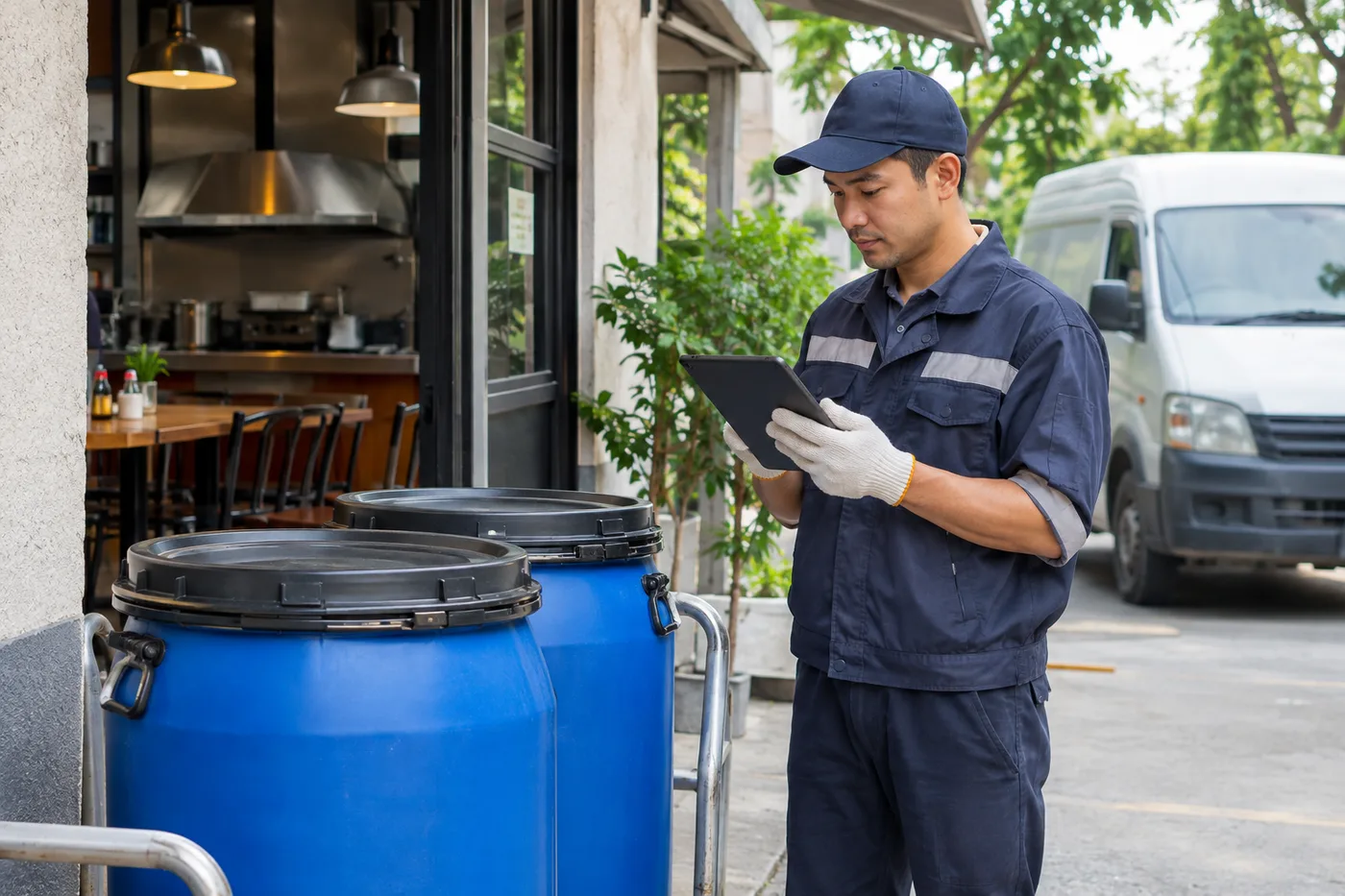
A restaurant requests an extra used cooking oil collection. Until the driver confirms the visit and staff check the document, the call remains a request: it proves neither collection nor the quantity picked up. A useful record separates request, planning, visit and documentation, and keeps exceptions visible.
Before commissioning development, examine your current system. Unidata describes a collection app with litres, incidents, signature and delivery notes; ask how it handles changes, cancellations and exports. An existing solution may fit your workflow.
Two locations, two different outcomes
In a fictional example, the office receives requests from restaurants C1 and C2 and proposes both for a route. At C1 the driver confirms a collection of 30 litres and records the delivery-note reference. C2 is closed: the driver records a visit without a collection and the office must agree another date.
C1 retains the request, visit and document as separate facts. C2 keeps its request open, without inventing litres or a delivery note. A forwarded copy of C1’s document links to the same record rather than creating a second collection.
What the office needs to retain
For each location, agree an identifier, address and authorised contact; then keep the date and channel of the request, proposed route, visit outcome, recorded amount and unit, and document reference. If drums are delivered or collected, record each confirmed movement separately. An earlier estimate does not replace the quantity recorded at the visit.
Agree who can correct data, retain versions and leave an incident open. As when reviewing courier incidents and proof of delivery, link each observation to its source and avoid treating a draft as confirmation.
When rules, AI or integration can help
A simple rule could list open requests by area and show the coordinator which have no confirmed visit. A person chooses the route; the application does not declare a collection complete just because it appears on a calendar. For free-text notes, generative AI could propose a summary linked to the original and flag missing data; staff review the location, quantities and documentation before saving changes.
An assistant with restricted access could consult records through application functions; OpenAI documents this general connection. Writing would require permissions and explicit approval. This is a possibility to assess, not an existing Adaris integration. Do not share real customer data without permission and appropriate access and processing conditions.
The same distinction between plan and movement matters when preparing a vending route load: a prepared list does not show what happened at each stop.
What to compare before commissioning software
Ask a provider to demonstrate a failed visit, duplicate request and corrected document. Check data export, editing permissions, offline behaviour where needed, costs and support. If your existing system covers the workflow, configuration may be enough.
If gaps remain between tools, Adaris can assess an integration or custom development after checking the permissions, formats and access actually available. In the context of contracting the service, the Catalan Waste Agency guide addresses planning and including documentary control of collected and managed quantities in award criteria; responsible staff must check requirements for their territory and operation. Software does not grant authorisations or by itself establish compliance.
A pilot to check the workflow
A proposed pilot could replay C1 and C2 with fictional data: check that a visit without collection creates no litres, that C1’s document is linked only once and that a responsible person can correct an error while preserving its origin. Over an agreed period, the business could count unresolved requests, corrections and review time against its current method; no results or savings have been demonstrated.
To discuss your case with Adaris, describe how requests arrive, which tools you use and where information gets lost. Scope, access and validation can be agreed afterwards; you need not prepare a pilot before getting in touch.
Related services
Sources
Are requests mixed up with completed pickups?
Adaris brings AI-integration specialists to used-oil collection, turning authorised messages into request drafts while dispatch and drivers confirm routes and visits. Tell us how you coordinate locations, routes and documents. We can assess a solution. Commercial support is in Spanish.